

In the world of logistics and warehousing, pallets play a crucial role in the efficient movement and storage of goods. Pallet molds are essential tools for manufacturing these pallets, and there are two main types: standard and non - standard pallet molds. As a professional pallet mold supplier, I have witnessed firsthand the various cost differences between these two types. In this blog, I'll delve into the factors that contribute to the cost disparities and help you understand which option might be the best fit for your business.
Understanding Standard and Non - Standard Pallet Molds
Before we explore the cost differences, it's important to define what standard and non - standard pallet molds are. Standard pallet molds are designed to produce pallets that adhere to widely recognized industry dimensions and specifications. These standard pallets are commonly used and can be easily integrated into existing logistics systems. For example, in the United States, the GMA (Grocery Manufacturers Association) pallet with dimensions of 48" x 40" is a well - known standard.
On the other hand, non - standard pallet molds are customized to meet specific requirements that deviate from the standard specifications. This could include unique sizes, shapes, or features tailored to a particular industry or application. For instance, a company that deals with oversized or oddly shaped products may require a non - standard pallet size to ensure proper handling and storage.
Raw Material Costs
One of the primary factors affecting the cost of pallet molds is the raw material used in their production. Standard pallet molds can often be made from more commonly available materials because they follow well - established designs. Manufacturers can purchase these materials in bulk, which reduces the per - unit cost. For example, steel is a common material for pallet molds, and when producing standard molds, steel suppliers may offer better prices due to large - scale orders.
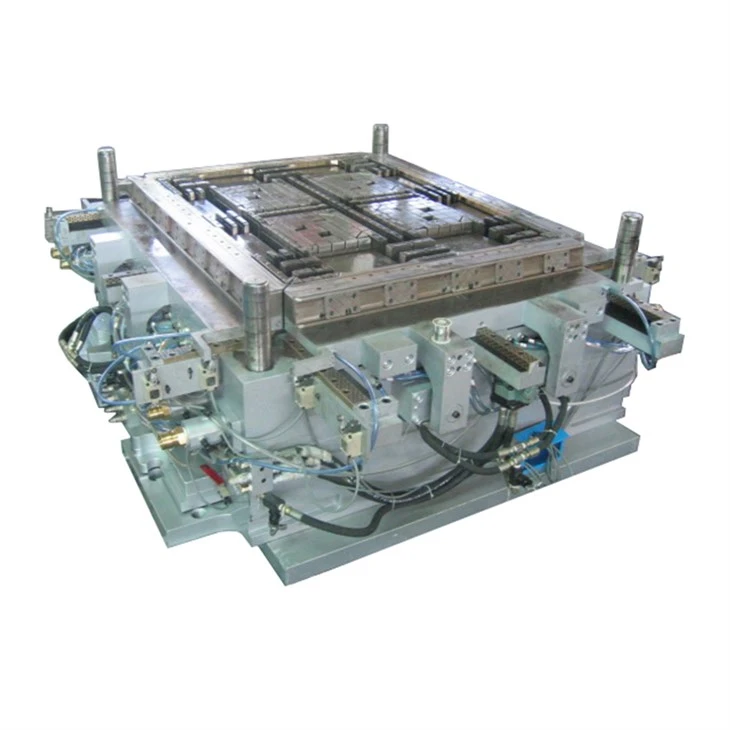

Non - standard pallet molds, however, may require special or harder - to - source materials. If a unique shape or design demands a different type of steel with specific properties, such as higher strength or better corrosion resistance, the cost of the raw material can increase significantly. Additionally, since non - standard molds are produced in smaller quantities, the supplier may not be able to negotiate the same favorable material prices as with standard molds.
Manufacturing Complexity
The manufacturing process for standard and non - standard pallet molds also differs in terms of complexity. Standard molds are produced using well - defined manufacturing techniques and processes that have been optimized over time. The machinery and equipment used for standard mold production are often set up in a way that maximizes efficiency and minimizes waste. Workers are also familiar with the standard designs, which reduces the likelihood of errors and rework.
Non - standard pallet molds, in contrast, present unique manufacturing challenges. The custom designs may require special machining operations, such as complex milling or EDM (Electrical Discharge Machining) work. These additional operations not only take more time but also require more skilled labor. The setup time for the machinery is also longer because the equipment needs to be adjusted to accommodate the non - standard specifications. All of these factors contribute to higher manufacturing costs for non - standard pallet molds.
Design and Engineering Costs
Design and engineering are critical aspects of pallet mold production, and the costs associated with them vary between standard and non - standard molds. Standard pallet molds typically have pre - existing designs that have been proven to work effectively. These designs can be reused with minor adjustments, which significantly reduces the design and engineering time and cost.
For non - standard pallet molds, a significant amount of design and engineering work is required. The design team needs to start from scratch or make extensive modifications to existing designs to meet the client's specific requirements. This involves detailed calculations, 3D modeling, and prototyping to ensure that the mold will produce the desired pallet. The time and expertise involved in this process add to the overall cost of the non - standard pallet mold.
Production Volume and Economies of Scale
Economies of scale play a major role in determining the cost of pallet molds. Standard pallet molds are often produced in large volumes because of the high demand for standard pallets. When a large number of molds are produced, the fixed costs of production, such as the cost of machinery setup and tooling, are spread over a larger number of units. This results in a lower per - unit cost for standard pallet molds.
Non - standard pallet molds, on the other hand, are usually produced in smaller quantities. Since the fixed costs are not spread over as many units, the per - unit cost of these molds is higher. For example, if a company orders only one or two non - standard pallet molds, the cost of setting up the production line and covering the upfront investment will be disproportionately high compared to ordering a large batch of standard molds.
Market Competition and Pricing
The level of market competition also affects the cost of standard and non - standard pallet molds. The market for standard pallet molds is highly competitive, with many suppliers offering similar products. This intense competition drives prices down as suppliers try to attract customers. As a result, customers can often find standard pallet molds at relatively lower prices.
In the case of non - standard pallet molds, the market is less competitive because the demand is more niche. There are fewer suppliers who have the expertise and capabilities to produce custom - designed molds. This lack of competition allows suppliers to charge higher prices for non - standard pallet molds.
Examples of Cost Differences
Let's take a look at some real - world examples to illustrate the cost differences between standard and non - standard pallet molds. Suppose a standard Single Face Pallet Mold that produces a commonly used pallet size can be purchased for around $X. This price reflects the relatively low raw material cost, efficient manufacturing process, and economies of scale associated with standard molds.
In contrast, a non - standard Welded Pallet Mold with a unique design and special features may cost upwards of $Y. The higher cost is due to the need for special materials, complex manufacturing processes, extensive design work, and the lack of economies of scale.
Another example is a Double Face Pallet Mold. A standard double - face pallet mold may cost around $Z, while a non - standard version with a custom size and enhanced load - bearing capacity could cost significantly more, perhaps in the range of $(Z + A).
Which Option is Right for You?
The decision between standard and non - standard pallet molds depends on your specific needs and budget. If you are a large - scale pallet manufacturer or a company that uses standard pallets in high volumes, standard pallet molds are likely the more cost - effective option. They offer lower upfront costs, faster production times, and easier integration into existing logistics systems.
However, if your business has unique requirements that cannot be met by standard pallets, such as specialized product dimensions or handling needs, it may be worth investing in non - standard pallet molds. Although they are more expensive, the custom - designed pallets can improve efficiency, reduce product damage, and enhance overall operational performance.
Conclusion
As a pallet mold supplier, I understand that the cost difference between standard and non - standard pallet molds is influenced by multiple factors, including raw material costs, manufacturing complexity, design and engineering expenses, production volume, and market competition. While standard molds offer cost savings due to their more straightforward production processes and economies of scale, non - standard molds provide the flexibility to meet specific business needs.
If you are considering purchasing pallet molds for your business, I encourage you to reach out to discuss your requirements. Whether you are interested in standard or non - standard options, I'm here to help you make an informed decision and find the best solution for your pallet manufacturing needs.
References
- Industry reports on pallet mold manufacturing
- Interviews with industry experts in pallet mold production
- Case studies of companies using standard and non - standard pallet molds